
Super Accelerated Exposure Test
Enabling Long-Term Appearance Retention in Exterior Coatings
Enabling Long-Term Appearance Retention in Exterior Coatings
Enabling Long-Term Appearance Retention in Exterior Coatings
Super accelerated exposure testing is a durability evaluation method designed to rapidly assess the photocatalytic durability of titanium dioxide (TiO₂) in coating systems.
Unlike conventional accelerated weathering tests, which mainly reflect resin‑driven degradation, super accelerated exposure selectively intensifies TiO₂‑driven photocatalytic deterioration, enabling clear differentiation of TiO₂ performance within a much shorter timeframe.
As durability expectations for exterior coatings continue to increase, differences between results obtained from conventional accelerated weathering tests and
natural outdoor exposure have become more apparent.
While QUV and Xenon Weather‑Ometer (XWOM) testing remain essential industry standards, they do not always reliably predict long‑term performance under natural exposure conditions—particularly as service life requirements extend. Understanding what each test method can, and cannot, evaluate is therefore critical when assessing TiO₂ durability.
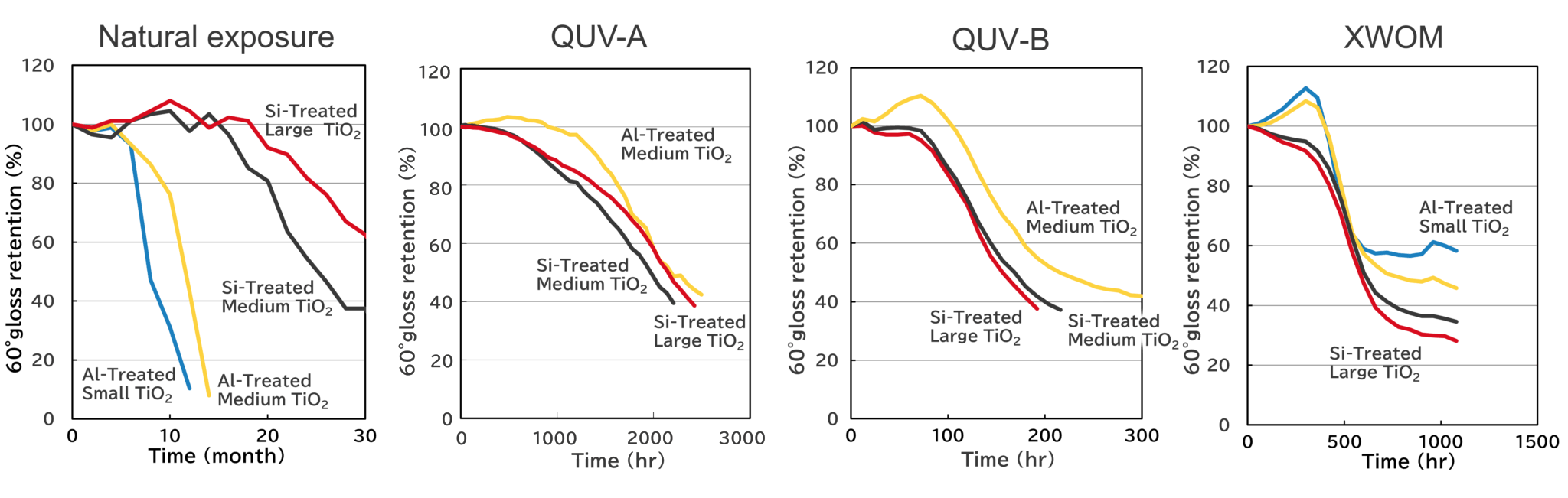
The correlation data shown below illustrates how results from conventional accelerated tests increasingly diverge from natural exposure as durability requirements extend.
Comparison studies show that TiO₂ durability rankings obtained from QUV or XWOM frequently do not correlate well with natural outdoor exposure results. While these tests effectively evaluate resin stability, the relative performance order of TiO₂ grades observed under QUV or XWOM conditions may differ from that seen after prolonged natural exposure.
This mismatch indicates that QUV and XWOM alone are insufficient for determining the intrinsic durability of TiO₂ within a coating system.
The durability order in QUV-A, QUV-B and XWOM is totally flipped from the result of natural exposure test.
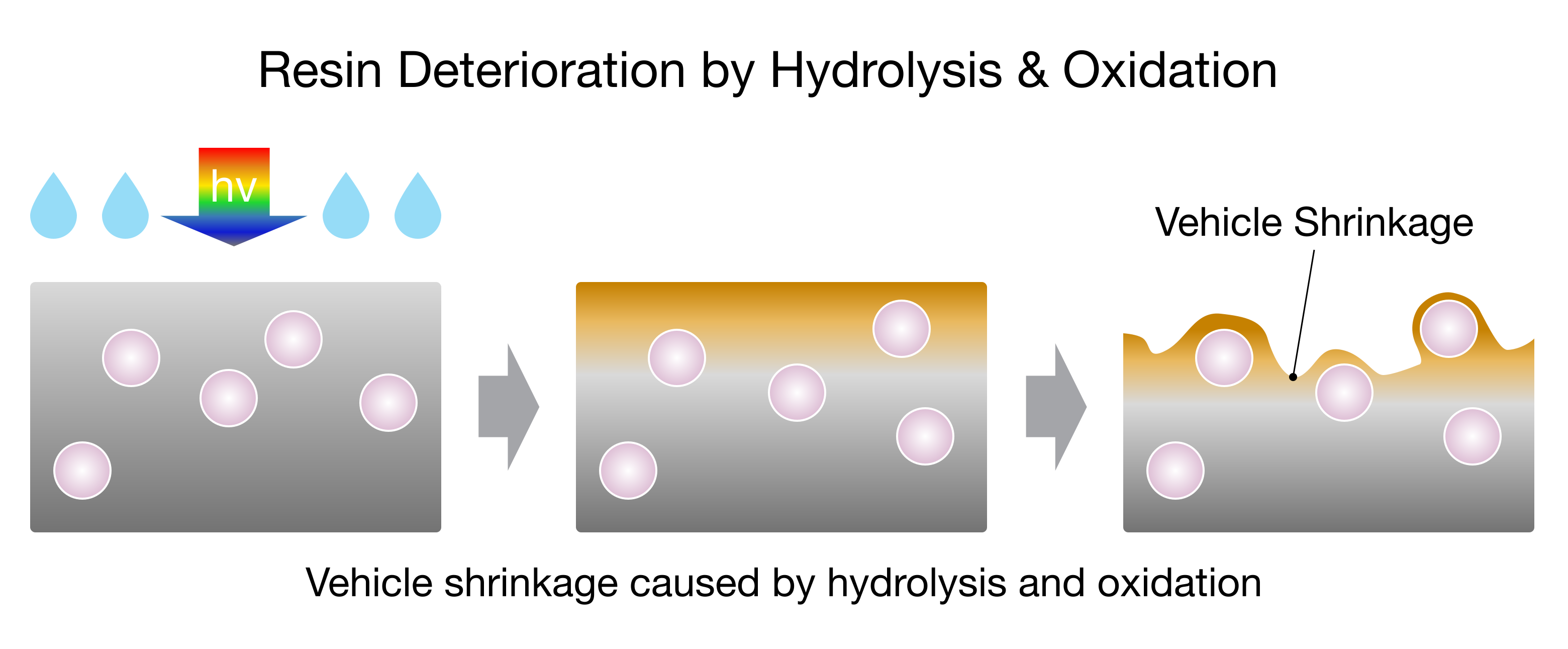
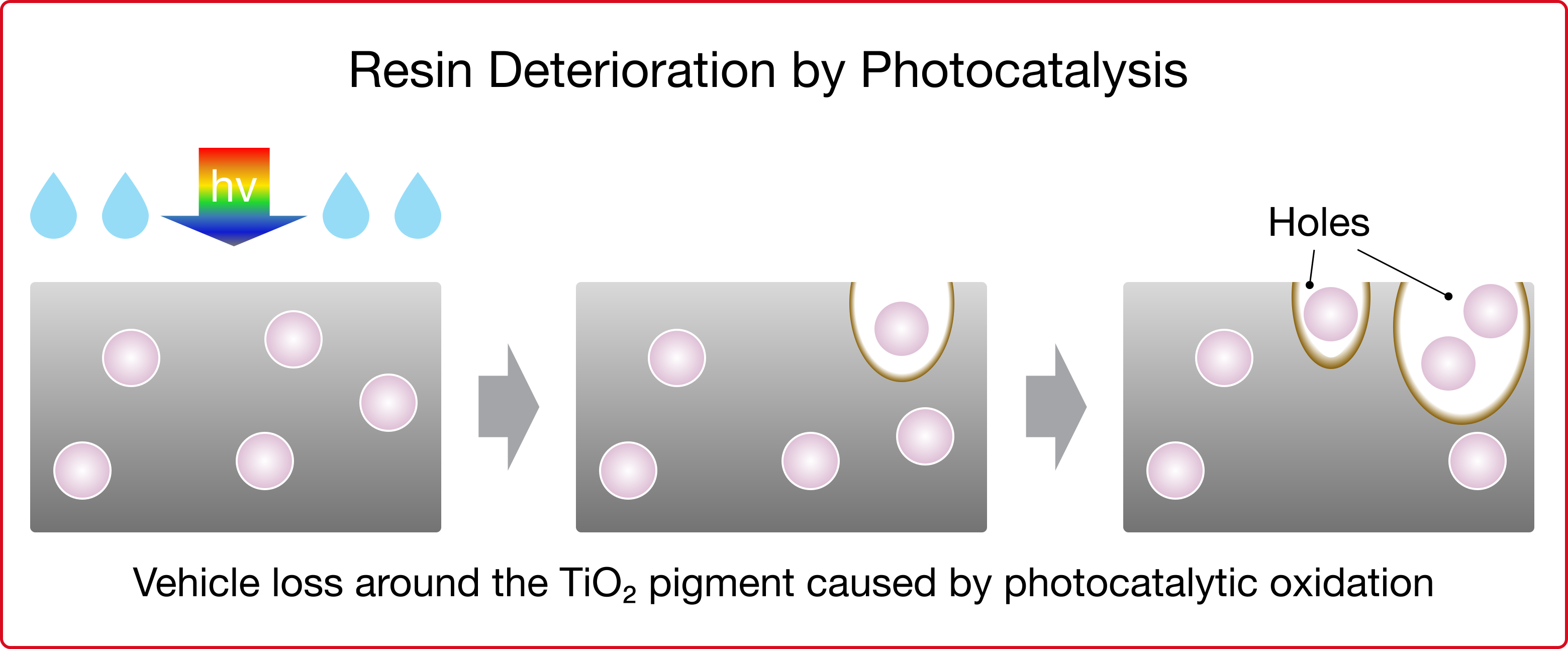
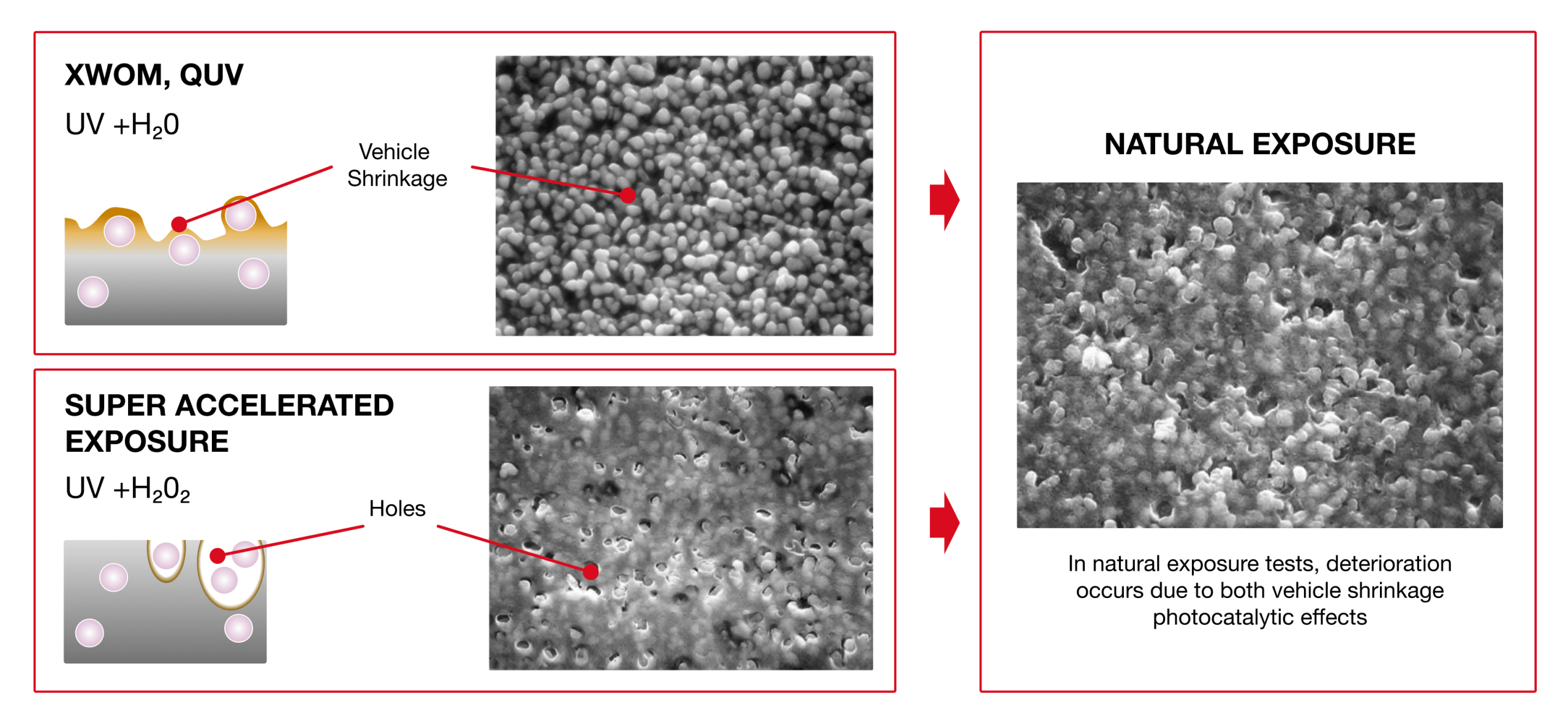
TiO₂ contributes to coating degradation through photocatalytic activity. Under UV irradiation, TiO₂ generates reactive species that locally attack organic binders at the pigment–resin interface.
This mechanism is fundamentally different from uniform resin oxidation. Instead of overall vehicle shrinkage, TiO₂‑driven degradation produces localized binder loss and hole formation around pigment particles—features that are not clearly distinguished in conventional accelerated tests.
To evaluate TiO₂ durability effectively, a test method must intentionally accelerate this photocatalytic process.
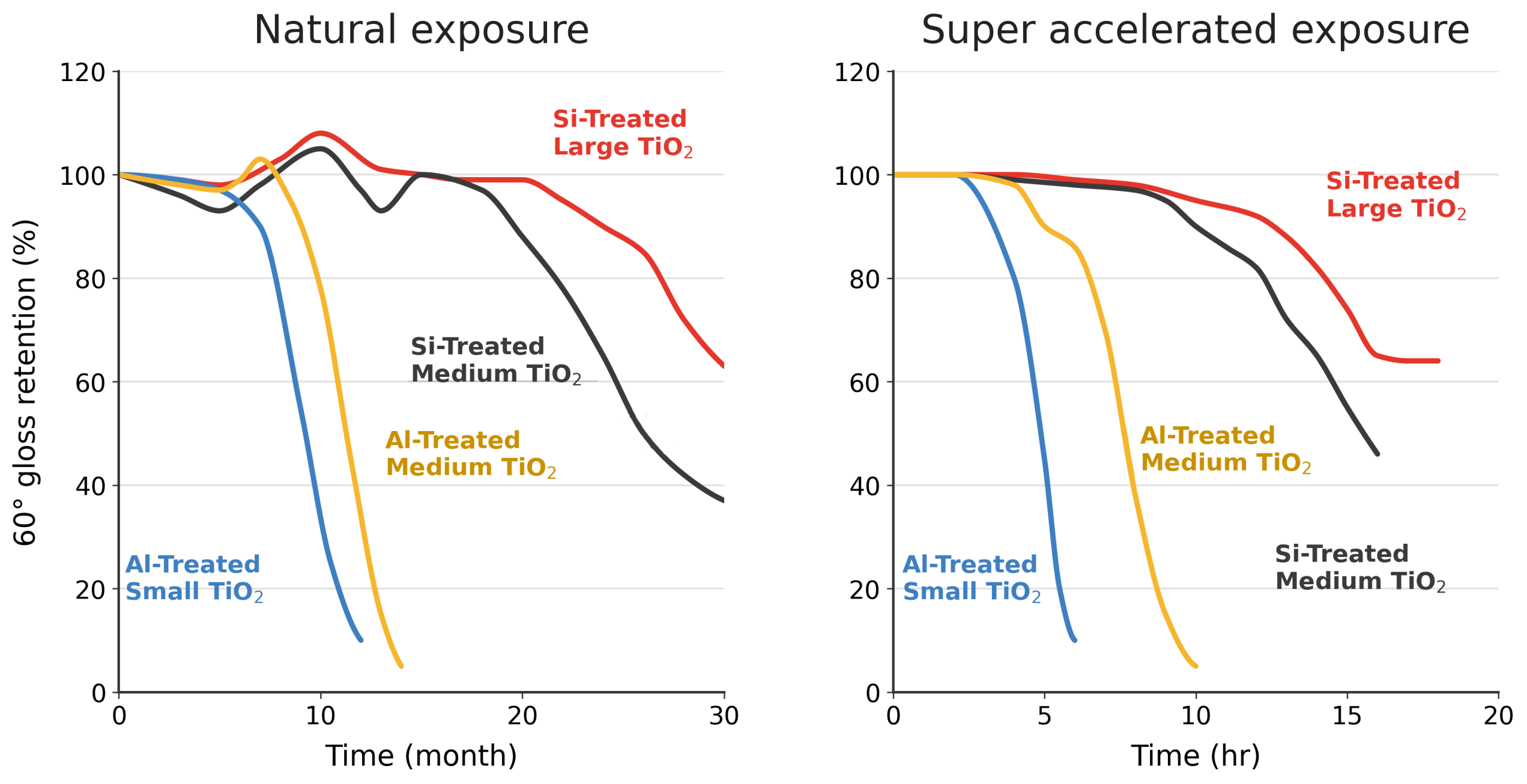
Correlation data demonstrate that TiO₂ durability rankings obtained from super accelerated exposure closely align with those observed in natural outdoor exposure.
Trends in gloss retention and surface deterioration under super accelerated conditions mirror long‑term natural exposure behavior, but within a practical laboratory timeframe.
This strong correlation makes super accelerated exposure an effective screening tool for identifying durable TiO₂ grades before committing to extended weathering programs.
*PVDF Coating (P/B = 0.56, Film Thickness = 30μm)
Effective coating durability evaluation requires multiple complementary tests, each addressing a different aspect of performance.
TIPAQUE® PFC105 is ISK’s super durable titanium dioxide, engineered to suppress TiO₂‑driven photocatalytic degradation and support long‑term appearance retention in exterior coatings. By controlling durability at the pigment level, PFC105 enables coating designs in which titanium dioxide no longer limits service life.
In exterior coatings, titanium dioxide plays a central role not only in opacity and color but also in long‑term durability. Under UV exposure, TiO₂ can accelerate binder degradation through photocatalytic reactions, directly impacting coating lifetime.
Binder degradation • Gloss & color loss • Surface chalking
Accurate evaluation of TiO₂ weatherability is therefore critical when selecting pigments for durable coating formulations.
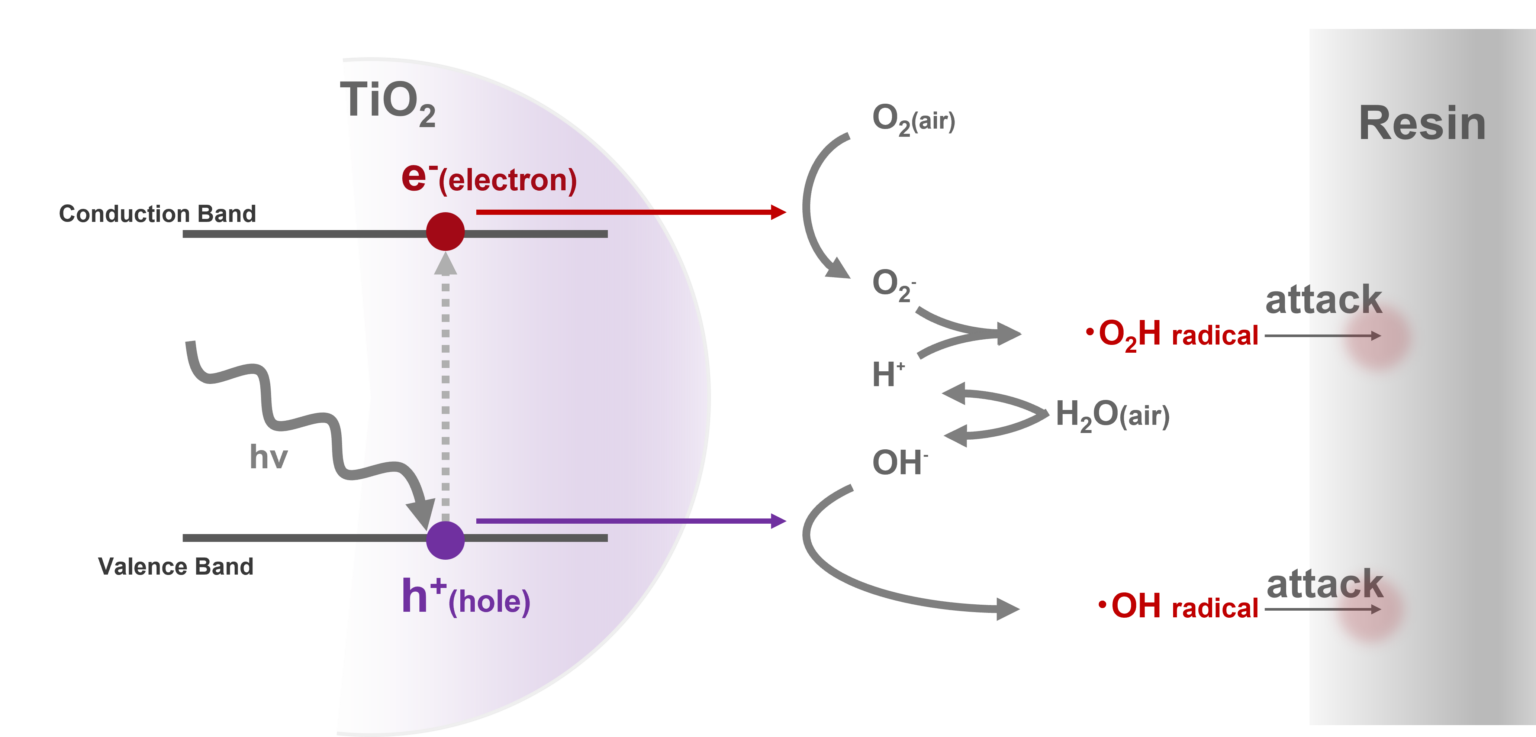
TiO₂ photocatalysis occurs when UV irradiation generates electron–hole pairs within the TiO₂ lattice, leading to the formation of reactive oxygen species that attack organic binders.
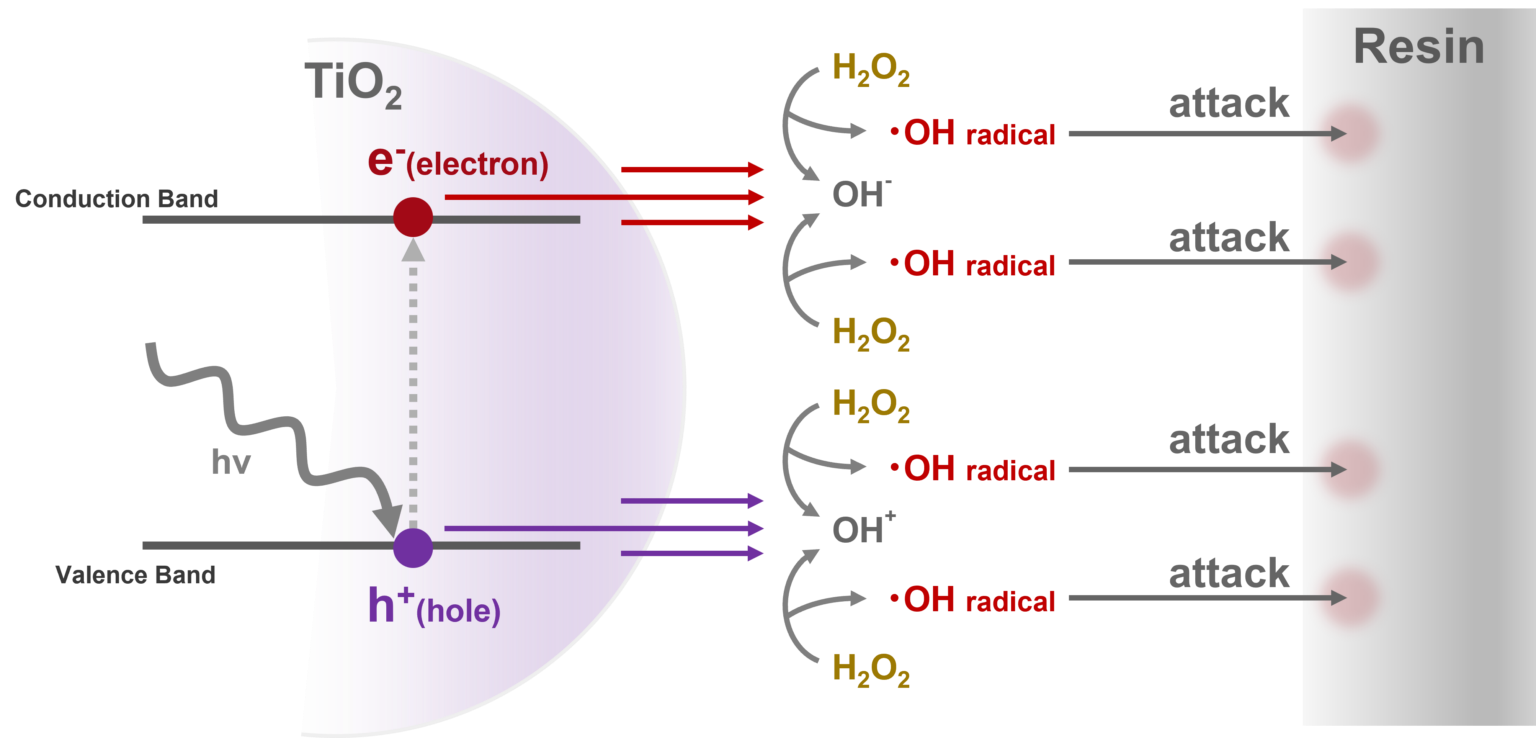
Super accelerated exposure combines UV irradiation and hydrogen peroxide to intensify TiO₂ photocatalytic activity, accelerating degradation.
